 ไทย
 September 19, 2026

ฝากข้อความ
หากคุณสนใจผลิตภัณฑ์ของเราและต้องการทราบรายละเอียดเพิ่มเติม โปรดฝากข้อความไว้ที่นี่ เราจะตอบกลับคุณโดยเร็วที่สุด


Low flake ice output and wet, soft flakes usually trace to heat rejection or water-side problems before any component has failed. The first check is the condenser: dust, grease or scale on the condenser raises high-side pressure and reduces cooling efficiency. The second is the evaporator water side: scale on the drum insulates the freezing surface and produces soft, brittle flakes. Refrigerant charge and inlet water temperature are the next checks. Work in this order before calling for service.
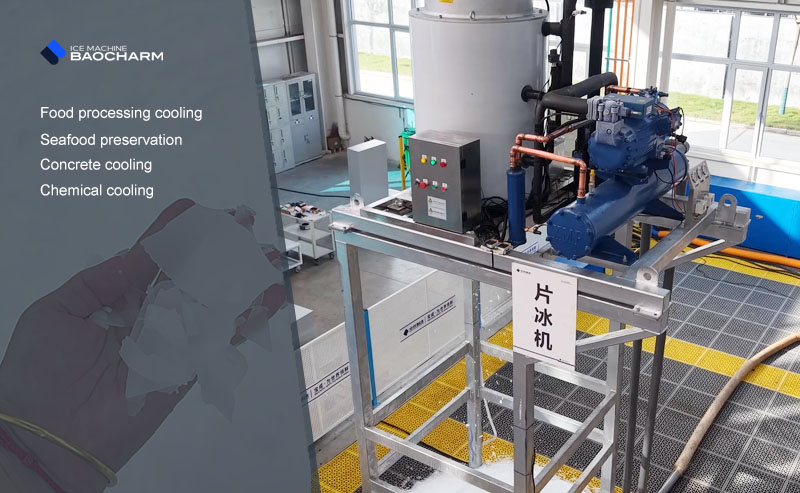
A dirty condenser is the first place to look when output falls gradually and flakes become thin and wet. Dust and grease caked on air-cooled condenser fins, or scale inside water-cooled condenser pipes, raise system high-side pressure and reduce cooling efficiency. Poor ambient ventilation and room temperatures above 40°C have the same effect. A dirty air-cooled condenser or a hot room can cut ice output by 15–25% before any part has failed.
What to check:
Scale on the evaporator drum acts as insulation. It blocks cold transfer from the drum surface to the water film, so the ice layer forms more slowly and is wetter when scraped. Output drops slowly over months rather than abruptly. Symptoms include soft, brittle flakes and a visible mineral layer on the freezing surface.
What to check:
If condenser and water side are clean, check refrigerant charge. A small leak does not stop ice production completely; it produces less ice and softer flakes over weeks. Symptoms include a suction line that is cool but not frosty, frost on part of the evaporator drum, and a steady decline in output.
Do not top up refrigerant blindly. Locating and repairing the leak is part of the repair; adding refrigerant without addressing the leak only delays the next failure.
| Symptom | First check | Second check | Likely cause | Action |
| Low output, flakes thin and wet | Condenser cleanliness and airflow | Inlet water temperature and flow | Heat rejection problem | Clean condenser; improve ventilation; adjust water flow |
| Output drops slowly over months | Evaporator drum scale | Water hardness and treatment | Scale insulation | Descale drum; review water treatment |
| Output falls week by week; flakes carry excess water | Refrigerant charge indicators | Suction line and frost pattern | Small refrigerant leak | Locate and repair leak; recharge to specification |
| Soft, brittle flakes without major output loss | Evaporator surface condition | Blade clearance and wear | Heat transfer or blade issue | Descale; inspect blade; confirm clearance |
| Frequent high-pressure cycling | Condenser heat rejection | Ambient room temperature | High-side pressure | Clean condenser; reduce room temperature; improve airflow |
Troubleshooting sequence for general guidance. Follow the manufacturer’s service manual and safety procedures for refrigerant handling and electrical work.
Most of these faults are preventable with a routine that focuses on heat rejection and water quality.
| Item | Check / clean frequency | Note |
| Condenser fins or pipes | Monthly, or more often in dusty environments | Air-cooled fins and water-cooled pipes both need inspection |
| Evaporator drum surface | According to water hardness and runtime | Descale before output decline becomes visible |
| Water distribution tray and filter | Monthly | Plugging causes uneven film and wet flakes |
| Refrigerant charge indicators | During routine service | A small leak shows as gradual output loss, not a hard stop |
| Blade condition and clearance | According to duty cycle | Worn blade leaves residual ice layer and reduces heat transfer |
Intervals should be adjusted to site dust, water hardness and duty cycle. The table is a starting point, not a fixed schedule.
For the working principle behind these symptoms, see How a Flake Ice Machine Works: Vertical Inner-Scraping Evaporator and Ice Blade Explained. For capacity correction when the machine is clean but still short of expectation, see How to Calculate Flake Ice Machine Daily Capacity: Standard Conditions, Summer Correction and Sizing Margin.
Why is my flake ice wet and soft?
Wet, soft flakes usually indicate that the freezing surface is not cold enough or that the water film is too thick. Check condenser cleanliness and airflow first, then evaporator scale, inlet water temperature and refrigerant charge. A worn blade or incorrect clearance can also leave a residual ice layer that degrades heat transfer.
What should be cleaned first when output drops?
Start with the condenser. It is the most common cause of gradual output loss and the easiest to inspect. If the condenser and airflow are clean, move to the evaporator water side: scale, inlet water temperature and water flow. Refrigerant charge is the next check after the heat-rejection and water-side causes have been ruled out.
How often should the condenser be cleaned?
Monthly inspection is a reasonable starting point, with more frequent cleaning in dusty or greasy environments. Air-cooled fins and water-cooled pipes both need attention. The right interval depends on site conditions; a clean condenser is the baseline for rated output.
Download the first-line troubleshooting sequence for low output and wet ice, or send your observed symptoms for a structured check order. → Get the troubleshooting checklist


ติดต่อเรา
อีเมล: sales@baocharm.com
วอทส์แอป: +86 17663537579
วีแชท: +86 17663537579
เวลาทำการ: จันทร์ ~ เสาร์ 8:30 - 17:30 น.
 รองรับเครือข่าย IPv6

